Per- and polyfluoroalkyl substances (PFAS for short) comprise a class of over 10,000 synthetic chemicals characterised by an extremely strong bond between fluorine and carbon. As life is based on carbon, PFAS can easily interact with flora and fauna. The fluorine–carbon bond is significantly more stable than almost all other organic chemical bonds and gives these substances unique properties. PFAS are heat-resistant, chemically inert, dielectric, low-friction, biocompatible and repel water, grease and dirt. As a result, they are used in consumer goods such as outdoor clothing, Teflon pans, cosmetics and fire-extinguishing foams, in medical technology for implants and catheters, and equally in key technologies such as semiconductors and components for the energy transition – for example, EV batteries and electrolysers.
Whilst the strong fluorocarbon bond is responsible for the outstanding properties of PFAS, it also makes them persistent, meaning they cannot, in practice, be broken down in the environment and remain in the ecosystem for centuries. In a conversation with the SATW, the three experts – Manfred Heuberger (Empa), Martin Scheringer (ETH Zurich) and Dominique Werner (Scienceindustries) – explain the main challenges involved in dealing with PFAS and outline possible scenarios for the future.

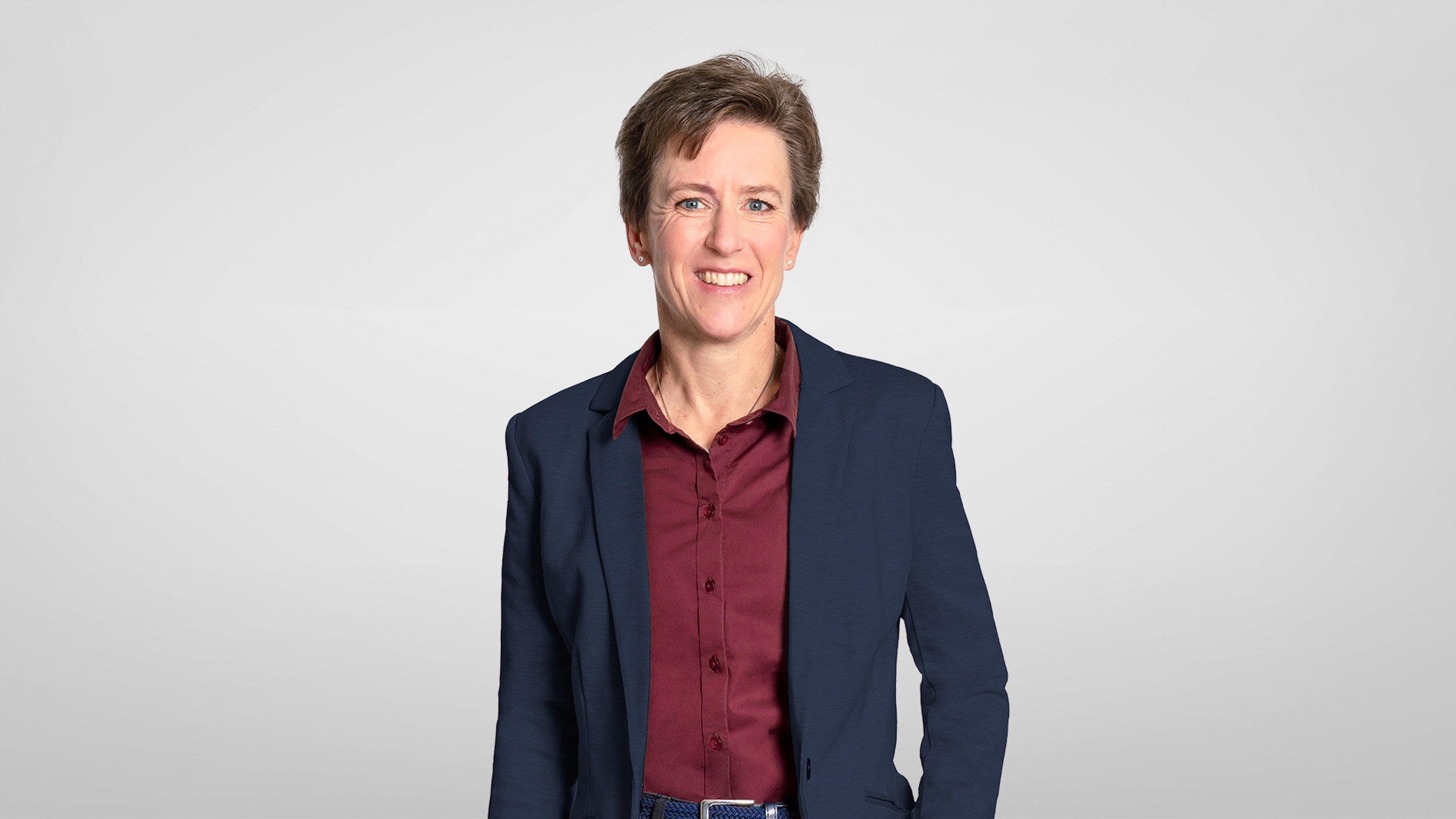
“There is a clear desire on all sides to find better solutions. Our shared, cross-generational goal is to ensure that even our great-great-grandchildren can still lead healthy lives.”
Manfred Heuberger (Empa)What are the difficulties involved in replacing PFAS?
Scheringer: Phasing out PFAS presents two main challenges. Firstly, the enormous variety of applications makes replacement complex. There is no single substance that can serve as an alternative for all applications; an individual solution must be found for each specific use. This is achievable through research and development, and the alternatives are often even more effective. Secondly, the switch often requires adjustments to raw materials or processes. Whilst this plant conversion is possible, it does entail additional time and cost.
Werner: The challenges lie on several levels. In addition to well-known consumer and industrial products, PFAS are often found in hidden but functionally critical applications. Examples include coatings on high-pressure pumps in coffee machines, seals in heat pumps, membranes in e-bike batteries, or heat transfer fluids in locomotives. Users expect these product performance characteristics without realising the link to PFAS. Therefore, the first step is to analyse where and why PFAS are used. Finding a substitute – be it a material in technical systems, a chemical in production or an active ingredient in medicines – becomes all the more difficult the more of the unique properties of PFAS are required simultaneously. Once this hurdle has been overcome, the alternative must meet four further criteria: it must perform better from an environmental perspective, be commercially available, economically viable and socially acceptable.
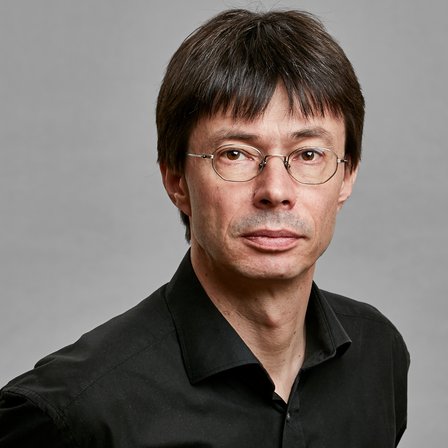
“When it comes to phasing out PFAS, it is often not simply a matter of replacing chemicals, but of making changes to processes and designs.”
Martin Scheringer (ETH Zurich)For which applications are alternatives already available?
Scheringer: Alternatives already exist for hundreds of applications. However, as there is no comprehensive inventory, it is impossible to provide an exhaustive list. Key sources for an overview include the ZeroPM Alternative Assessment Database and the publication by Ateia & Scheringer. Virtually all water-repellent treatments can now be replaced; and as early as 2003, 3M developed PFAS-free variants for fire-fighting foams that are just as effective.
A key approach to phasing out PFAS, however, is that it is often not simply a matter of replacing chemicals, but rather of making changes to processes and design. For example, in highly toxic chromium plating baths, the PFAS-based anti-foaming agent can be dispensed with by operating the baths in a vacuum environment instead. Another example is baking paper: its grease-proof properties can be achieved purely mechanically, without any impregnation, through a special treatment of the wood at the paper mill – a process that was successfully used in Sweden over a hundred years ago, and thus long before the invention of PFAS.
Werner: A study by the Swiss Academy of Sciences (SCNAT) from 2025 examined around 250 commercial and industrial PFAS applications, but identified alternatives for only around 16 per cent of them. From an industrial perspective, moreover, not all substitutes in this group meet the necessary criteria. For example,SF₆ is sometimes proposed as a replacement for F-gases in high-voltage switchgear, even though F-gases were introduced in the first place to reduce the extremely high global warming potential ofSF₆. The situation is similar for hundreds of thousands of Swiss heat pumps: whilst the alternatives to PFAS that are often promoted have existed for some time, they entail new risks. Ammonia is toxic and explosive, propane and butane are highly flammable, andCO₂ is not energy-efficient under all operating conditions.
A PFAS substitute is therefore most feasible where the full range of properties is not required. In outdoor equipment, for example, whilst the material must be water- and dirt-repellent, electrical insulation or chemical resistance are irrelevant. That is why alternatives already exist in this area. The analysis for PFAS replacement must be carried out separately for each application; otherwise, as a society, we run the risk of making the situation worse.
What is the situation regarding ‘regrettable substitution’ when it comes to these alternatives?
Scheringer: Potential alternatives are systematically assessed for risks using standardised methods such as the Assessment of Alternatives. Overall, the risk of a widespread problematic substitution is low for three reasons: Firstly, by definition, alternative substances do not contain fluorine-carbon bonds. As this extremely stable bond is the main cause of the longevity of PFAS and the associated problems, fluorine-free alternatives are much more readily biodegradable. Secondly, there is no universal class of substitute substances that can replace PFAS on a one-to-one basis in all areas. Instead, many different, application-specific solutions are used. This prevents a single substance from once again accumulating on a widespread scale in the environment and in everyday life. And thirdly, there are already established and proven safe solutions, such as uncoated baking paper, polypropylene in medical technology, or fluorine-free refrigerants such as propane/butane in heat pumps.
Werner: Alternatives must perform better than the substance they are replacing when assessed from an overall environmental perspective. Because insufficient attention was sometimes paid to this aspect in the past, this led to so-called ‘regrettable substitutions’. For example, in large electric drive systems, transformers and capacitors – such as those fitted in the well-known blue locomotives of the Zurich Transport Network (ZVV) – the polychlorinated biphenyls (PCBs) previously used were replaced by oils that fall under the PFAS definition. From today’s perspective, this constitutes a ‘regrettable substitution’.
It should also be noted that, in the case of heat pumps, the alternatives now being promoted once again – the so-called natural refrigerants such as propane-butane mixtures, ammonia orCO₂ – were available long before the fluorinated gases commonly used today. These were the alternatives chosen to minimise other risks such as fire and explosion hazards, acute toxicity or poor energy efficiency. Furthermore, heat pumps operated with natural refrigerants cannot entirely do without PFAS either, for example in the form of stable and durable sealing systems made from fluoropolymers.
For which applications are there currently no alternatives? Why not?
Scheringer: The enormous variety of PFAS applications makes replacement difficult. In principle, it is difficult to find alternatives when all their properties are required. This is partly the case in medical technology and in chemical plants. Generally speaking, it can be said that there are substitutes for many non-polymeric PFAS, whereas replacing fluoropolymers is difficult.
Werner: It is challenging to identify which PFAS are used in which production processes and products, and for which properties. This applies to articles and equipment imported commercially or by private individuals. This also includes components for energy and storage systems, for mobile phones and laptops, as well as electronic components. It is particularly difficult to find and introduce alternatives in highly regulated sectors such as active pharmaceutical ingredients, medical devices, and analytical and diagnostic equipment.
What is the regulatory situation in Switzerland and Europe?
Heuberger: In line with the Stockholm Convention, Switzerland has banned a few groups of acutely toxic PFAS from 2025 onwards. There are still hardly any binding limit values for chronically toxic PFAS in water and food. However, things are slowly starting to move in this area, mainly driven by the EU.
Werner: Switzerland maintains its own independent chemicals legislation, harmonised with the EU where appropriate. This regulatory principle continues to make sense, as it allows for local conditions – such as the quality of infrastructure and the level of training amongst skilled workers – to be taken into account.
Against the backdrop of the EU’s proposal for a comprehensive ban on PFAS, Switzerland must bear in mind that the EU draft entails massive legal uncertainty and will lead to a significant erosion of Europe’s position as a manufacturing hub. Switzerland would be well advised to first acquire sound knowledge before imposing bans. This is because comprehensive bans displace domestic value creation and increase dependence on imports.
Why is it difficult to remove PFAS from the environment? What options are already available?
Heuberger: The ability to remove PFAS from the environment depends heavily on the chemical properties of the substance in question relative to its surroundings. Separation is successful when the PFAS differs significantly from the surrounding medium. However, PFAS are often poorly soluble in water and bind strongly to soil or food chains, which makes their removal considerably more difficult. Conversely, the ‘baby PFAS’ TFA plays a special role: It is water-soluble and therefore spreads rapidly throughout the global water cycle. However, because its properties are very similar to those of water, it is difficult to remove. Whilst some PFAS can be efficiently bound to activated carbon, this only binds them temporarily rather than destroying them. To render PFAS harmless once and for all, a very high energy input is required: the stable fluorine-carbon bond must be broken and the fluorine converted into a harmless, mineralised form.
Replacing and removing PFAS is a project that will span generations. What framework conditions does such a project require?
Heuberger: Complete global decontamination is hardly possible, or only so at great expense, due to the extreme longevity and widespread distribution of PFAS. We must therefore primarily find ways to minimise the long-term exposure risks to people and the natural environment. Such a generational project requires not only technical solutions, but also large-scale, long-term studies involving broad sections of the population. This is because small-scale or short-term studies lack the statistical power to capture the chronic risks associated with low-dose exposure. Furthermore, such a project requires time and money. The main problem, however, is that our current social structures – such as parliamentary terms, traditional project durations or funding cycles – are not designed to accommodate such long timeframes. We must find ways to provide stable support for projects across generations.
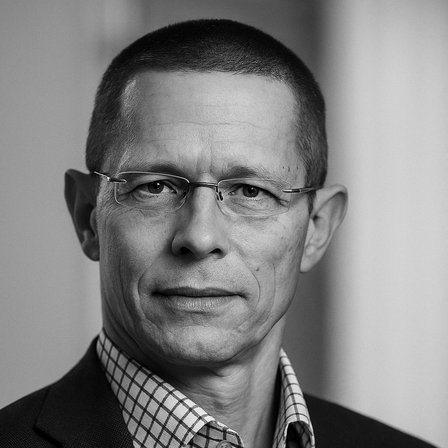
“Industry is making significant contributions to research and development in order to minimise releases into the environment and to develop more effective active ingredients and materials. A great deal of resources are currently being channelled into avoiding undesirable substitute products – so-called ‘regrettable substitutions’.”
Dominique Werner (Scienceindustries)How could such a cross-generational project be successfully implemented?
Heuberger: First of all, we need a structure that is institutionally designed to last for decades. A promising approach might well be a foundation that guarantees long-term continuity and financial independence through its remit.
I see three key pillars for its practical implementation: the project must have a transdisciplinary foundation to ensure independence and a broad perspective. In addition to the scientific community, we need representatives from industry and the healthcare sector, as well as consumers, and collaboration with the legislative bodies. Furthermore, tasks must be prioritised according to urgency and feasibility. In doing so, it is important to keep the bigger picture in mind: PFAS are not the only persistent chemicals that subject our health and the environment to invisible stress. And last but not least, existing initiatives such as the federal government’s action plan or the information platforms run by research institutes should be brought together to capitalise on synergies.
Is industry prepared to participate in such a long-term project?
Werner: Industry is not only participating; in some cases, it has already taken the initiative and remediated identified contaminated sites at its own expense and without the prospect of subsidies. However, as we as a society have benefited from the useful properties of PFAS for around 70 years, it is unrealistic to expect this contamination to disappear within a short space of time.
Furthermore, industry is making important contributions to research and development in order to minimise releases into the environment and to develop better active ingredients and materials. A great deal of resources are currently being channelled into avoiding undesirable substitute products – so-called ‘regrettable substitutions’. This risk was often underestimated in the past, with substances being banned without questioning their exact intended use. This regularly led to substitute materials which, whilst not affected by the ban, were not necessarily better when viewed in the broader context.
Why should such a project be implemented in Switzerland in particular?
Heuberger: A project of this kind is necessary in Switzerland precisely because, otherwise, we run the risk of merely adopting EU bans reactively and under pressure. Instead, the development of PFAS alternatives through close collaboration between industry, science and the legislative sector offers us a great opportunity to proactively harness our innovative strength. In doing so, it is crucial to analyse periodically where obstacles still lie along this path and what causes them. However, there is a clear desire on all sides to find better solutions. Ultimately, though, our shared, cross-generational goal remains: to ensure that even our great-great-grandchildren can still lead healthy lives.
| Role | Title + Name |
|---|---|
| Text by | Claudia Schärer |